

China has one of the world’s oldest and most continuous civilizations, with a history spanning almost 5,000 years, originating in the Yellow and Yangtze river basins. Its history is broadly divided into the pre-imperial era, the imperial era (dominated by a succession of dynasties), and the modern era.
Pre-Imperial China (up to 221 BCE)
Early hominids inhabited China as early as 2.25 million years ago. The first settlements developed into early agricultural communities along the rivers.
- Xia Dynasty (c. 2100–1600 BCE): Traditionally regarded as the first dynasty in Chinese history, though much of its history is shrouded in myth and archaeological identification is debated.
- Shang Dynasty (c. 1600–1046 BCE): The first dynasty with undisputed archaeological evidence and contemporary written records (oracle bone script), which represents the oldest form of written Chinese.
- Zhou Dynasty (c. 1046–221 BCE): Saw the development of a feudal system and the emergence of major philosophical schools, notably Confucianism and Daoism. This era included the Spring and Autumn and Warring States periods, a time of significant conflict that led to the rise of powerful states.
Imperial China (221 BCE – 1912 CE)
The imperial era began with the unification of China under an emperor and ended with the Xinhai Revolution.
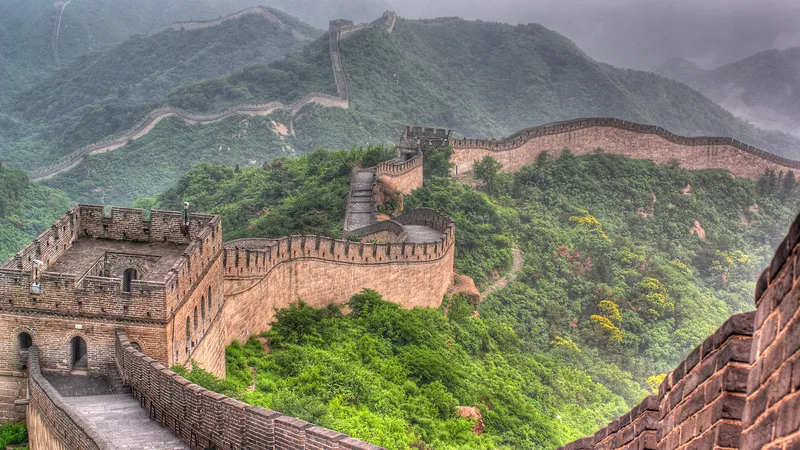
- Qin Dynasty (221–206 BCE): The first to unite China as a single country under Emperor Qin Shi Huang Di. He implemented Legalist reforms, standardized measurements and Chinese characters, and began work on what would become the Great Wall.
- Han Dynasty (206 BCE – 220 CE): A “golden age” during which the Han ethnic identity was formed and the Silk Road was established. It was a period of significant territorial expansion and economic prosperity, contemporary with the Roman Empire.
- Tang Dynasty (618–907): Often called the “Golden Age” of Chinese civilization, known for its flourishing arts, culture, and economic development, as well as having the only female emperor, Empress Wu.
- Song Dynasty (960–1279): Notable for technological advancements, including the invention of printing, the compass, and gunpowder, and the establishment of a permanent navy and paper money.
- Yuan Dynasty (1271–1368): Established by the Mongols after their conquest of the Song, it was the first foreign regime to rule all of China.
- Ming Dynasty (1368–1644): A celebrated era known for national strength and modernization, which focused on building or repairing much of the Great Wall.
- Qing Dynasty (1644–1912): The last imperial dynasty, founded by the Manchus. The late Qing period saw internal unrest, military defeats against foreign powers (like the Opium Wars and the First Sino-Japanese War), and ultimately, its collapse during the Xinhai Revolution.
Modern China (1912–present)
- Republic of China (ROC) (1912–1949): Established after the fall of the Qing, this period was marked by internal power struggles, the Second Sino-Japanese War, and a civil war between the Kuomintang (KMT) and the Communist Party of China (CCP).
- People’s Republic of China (PRC) (1949–present): Following the CCP’s victory in the civil war, Mao Zedong proclaimed the PRC. After Mao’s death, reforms starting in 1978 moved the country toward a market-based economy, leading to rapid economic growth and China becoming a major global power. Hong Kong and Macau returned to Chinese sovereignty in 1997 and 1999, respectively.